Mid-18th-Century Iberian Earrings – Garnets in Gold with Chased Floral Backs by Artista Desconocido

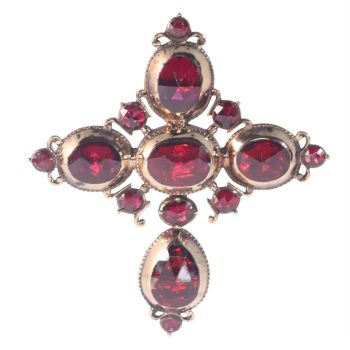
Mid-18th-Century Iberian Earrings – Garnets in Gold with Chased Floral Backs 1750

Artista Desconocido

GranateOroPiedra preciosa
€ 7.500

Adin Fine Antique Jewellery

  • Sobre la obra de arte

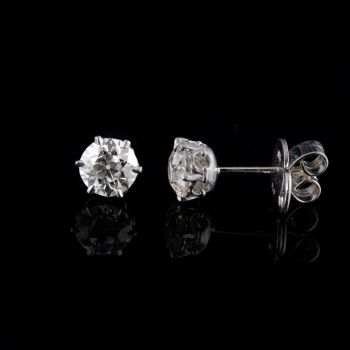
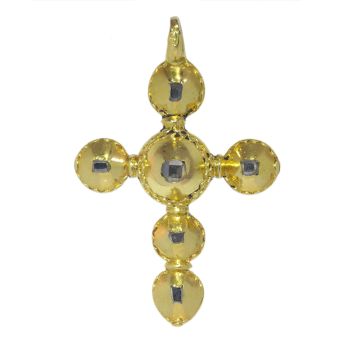
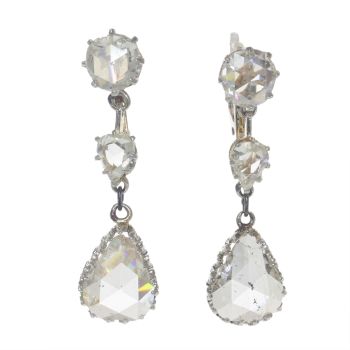
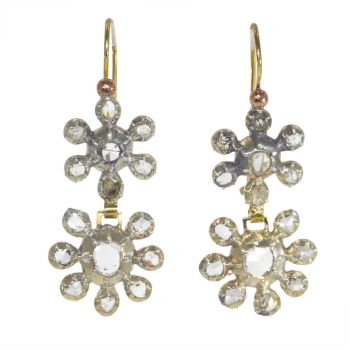
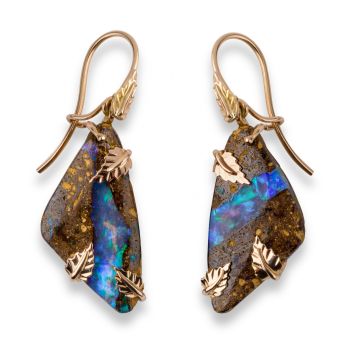
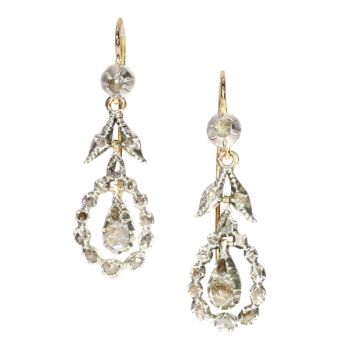
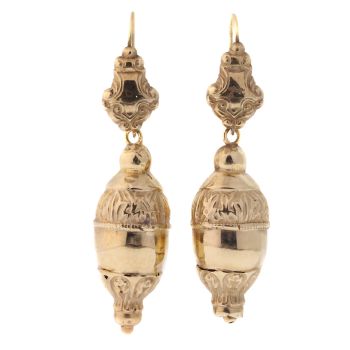
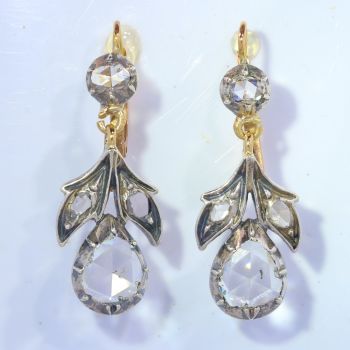
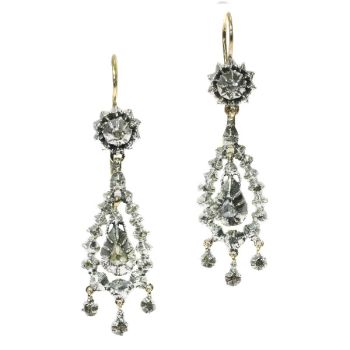
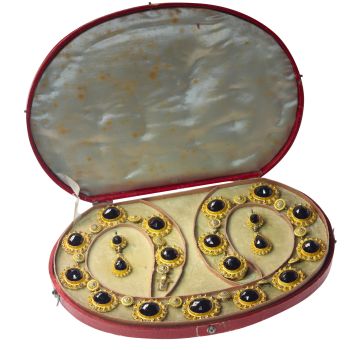
    These Iberian Baroque earrings, crafted circa 1750 in rich yellow gold, display the exuberant spirit of their age. Their sculpted surfaces, with repoussé floral motifs at the reverse, frame glowing red garnets that catch the light with warmth and depth. The tiered composition, from square to pear-shaped elements, creates a sense of lively movement, typical of Spanish and Portuguese jewels of the eighteenth century. Each earring carries an echo of history: a graceful ornament once meant to sway withcandlelight, now preserved as a testament to Baroque artistry and enduring elegance.

    Jewellery Type
    earrings long hanging

    Condition
    good condition
    more info on our condition scale

    Country of origin
    Although it carries no legible control marks, we believe this piece to be of Spanish or Portuguese origin, as the design is typical of 18th-century Iberian earrings.

    Style

    Baroque - Baroque is an artistic style that dominated Europe from the late 16th century to the early 18th century. Often described as "the leading style in European art between the Mannerist and Rococo periods, characterised by dynamic movement,heightened emotion, and bold expression."
    Find more info on Baroque
    more info on styles

    Style specifics
    Baroque is a style in art and decoration that developed shortly before 1600 and remained current in Europe until the emergence of the Rococo style c.1730. It was started in Italy, and spread to Germany, Austria, the Low Countries, and Spain andPortugal, with only a somewhat severely classical version being popular in France under Louis XIV. The style was a development of the Renaissance style and is characterized by lively, curved, and exuberant forms, by vigorous movement, and by richornament, based on classical sources, being symmetrical as distinguished from the asymmetry of the following Rococo style.

    Period
    ca. 1750
    Events & facts of this era, poetry of this era, fashion of this era.

    Material 14K
    yellow gold (touchstone tested)
    more info on precious metals

    Precious stones
    Ten garnets

    Birthstones
    Garnet is the birthstone (or month stone) for January.
    more info on birthstones

    Hallmarks
    No trace.
    more info on hallmarks

    Dimensions
    4,90 cm (1,93 inch) x 1,40 cm (0,55 inch)
    see picture with a ruler in millimeters and inches

    Weight
    7,80 gram (5,02 dwt)

    Adin Reference Nº
    25115-0314

    Copyright photography
    Adin, fine antique jewellery

    Additional information
    our latest acquisitions
    jewelry glossary
    wall of fame
    visit us in Antwerp
    subscribe to our mailinglist

  • Sobre el artista

    Puede suceder que un artista o creador sea desconocido.

    Algunas obras no deben determinarse por quién está hecho o por (un grupo de) artesanos. Algunos ejemplos son estatuas de la Antigüedad, muebles, espejos o firmas que no son claras o legibles, pero también algunas obras no están firmadas en absoluto.

    También puedes encontrar la siguiente descripción:

    •"Atribuido a …." En su opinión, probablemente una obra del artista, al menos en parte.

    •“Estudio de….” o “Taller de” En su opinión, una obra ejecutada en el estudio o taller del artista, posiblemente bajo su supervisión

    •“Círculo de…” En su opinión, una obra del período del artista que muestra su influencia, estrechamente asociado con el artista pero no necesariamente su alumno.

    •"Estilo de …." o “Seguidor de…”. En su opinión, una obra ejecutada al estilo del artista pero no necesariamente por un alumno; puede ser contemporáneo o casi contemporáneo

    •"Manera de …." En su opinión una obra al estilo del artista pero de fecha posterior

    •"Después …." En su opinión, una copia (de cualquier fecha) de una obra del artista

    •“Firmado…”, “Fechado…” o “Inscrito” En su opinión, la obra ha sido firmada/fechada/inscrita por el artista. La adición de un signo de interrogación indica un elemento de duda.

    •“Con firma…”, “Con fecha…”, “Con inscripción…” o “Lleva firma/fecha/inscripción” en su opinión la firma/fecha/inscripción ha sido añadida por alguien que no es el artista

¿Está interesado en comprar esta obra de arte?
Artwork details