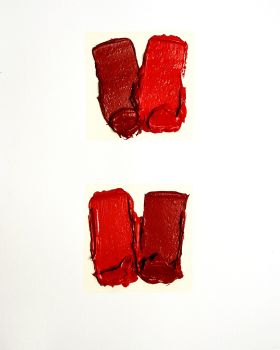
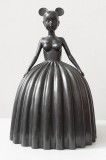
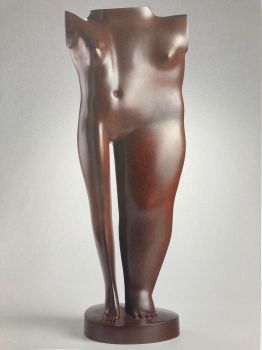
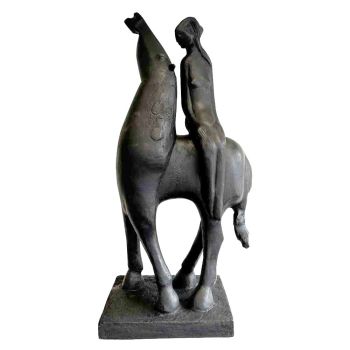
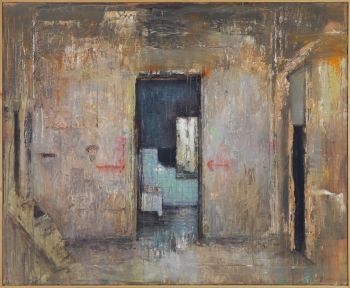
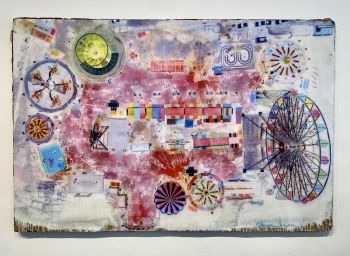
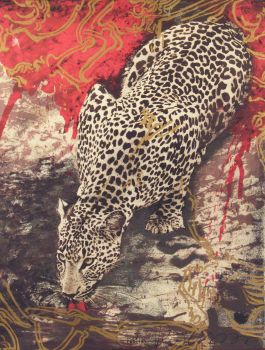
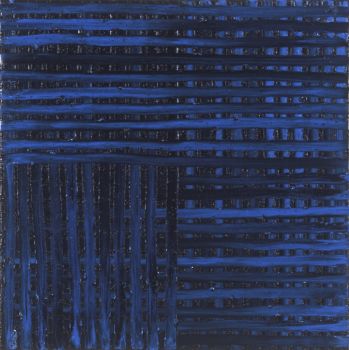
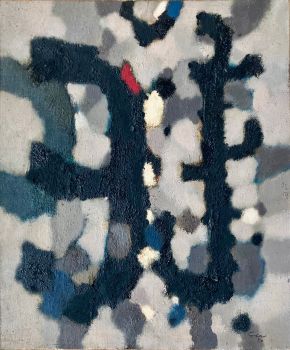
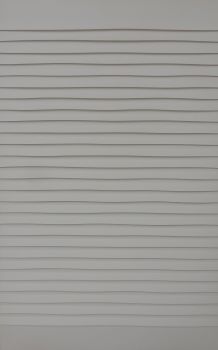
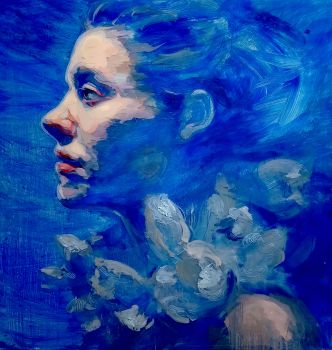
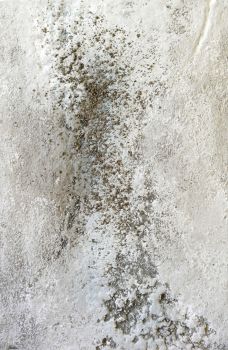
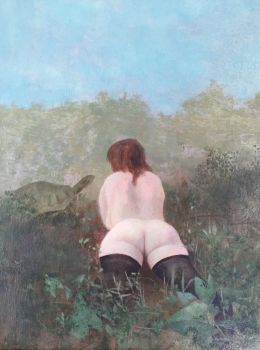
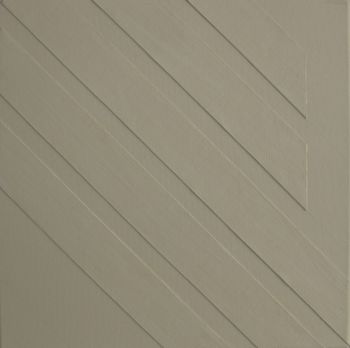
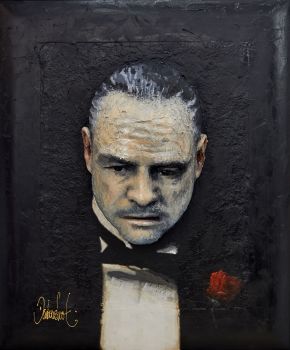
I Made Wianta,
oil on canvas, 120x240 cm
bought directly from teh artist.
I Made Wianta
Transcending cultural boundaries, Made Wianta (1949-2020) oeuvre is a pulsing epitome of moulding influences, inspirations and reinventions. Wianta practised painting, sculpture, installations, mixed media and performance art. Owing to his expertise in Balinese cultural dance and music, his artistic attempts involved a dynamic usage of his body in rendering colours on a canvas. He would often move around dancing while painting or sketching as an idea of total indulgence in a creative pursuit. Of the same attitude, his wife, Intan Wianta confesses, “When he was creative, he would put his entire body and spirit into it.”
Although trained at The Indonesian Academy of Fine Art in Yogyakarta, his perpetual zeal of learning, assimilating and expanding his knowledge exceeded the local and national margins. In 1975, when the world was shifting its gaze to modernism, Wianta made his trip to Europe, which augmented his time of experimenting with many shapes and signs. Since 1977, he has lived and worked in Brussels, Belgium.
Elucidating Bali, Asian, Chinese and Japanese artistic culture, his artworks persistently highlight glimmers of European surrealism and expressionism. One of the path-breaking modern Indonesian artists, Wianta’s lifelong works project his experimental attitude and constant renovation of abstract forms. At an overview, his works could be divided into several phases, which comprise dots, lines, triangles, calligraphy and mixed media. Spontaneous and vibrant, his black and white biomorphic renditions trace his interest in Sumi-e painting.
Having handled several media and art forms, Wianta’s exercises in performance art embarked on a new dimension of artistic discourse. While they reflected his emotions towards the socio-political and historical issues of Indonesia, his visual language subtly expressed his protest and resistance. More importantly, Wianta’s abstract movement of two-dimensional lines run parallel with his multi-media performances, leveraging meditative spirit and dynamic action.
Many of Wianta’s large abstract works are panelled with lyrical compositions of calligraphy like those of Chinese manuscripts. Standing at the brink of originality and influence, Wianta’s calligraphy expressions remind us of Japanese Kanji calligraphy. Interestingly, stated as choreo-calligraphy, the alphabets observe a free motion yet follow a beautiful rhythm. Just as lines, colours and forms, the space emanates a pervading symbiosis of the assorted elements, whether material or immaterial.
Reflecting on his versatile diversity, was it Wianta’s restlessness to know or a zealous will to move beyond the unknown? Can we describe them as just surfaces, or are they layers of experience and mobility within and without? Wianta’s practice is emblematic of changing life and its momentary acceptance. Robert C Morgan, in Wild Dogs In Bali: The Art of Made Wianta, published in 2005, explains, “There is a restlessness in Made Wianta that insists on producing some variation as yet unseen. He works from the premise that there is something to be revealed from the interior structure of memory, history, and legend, something that goes deep into the stratosphere of time, the cosmic energy of the soul that is ready at any moment to burst forth into the brightness of a thousand stars”.
Having exhibited worldwide, Made Wianta’s legacy of artistic practice is now taken care of by his wife and family.
Studied at the school of fine art in Denpasar and The Indonesian Academy of Fine Art in Yogyakarta. Before completing the programme, however, he went to Brussels, Belgium. For several years he worked and visited museums and galleries there, then returned to Indonesia in 1972. He has participated in many group and solo exhibitions in Indonesia and abroad, including the Venice Biennale in 2003, and Mike Weiss Gallery in New York, USA in 2005. His artistry has been documented in the books Made Wianta (1990), Made Wianta : Universal Balinese Artist (1999), Made Wianta : Art and Peace (2000), and Wild Dogs in Bali : The Art of Made Wianta (2005).