Anatomy - Jan Wandelaar after Bernhard Siegfried Albinus 1742 - 1747
Artista Desconocido
ImpresiónGrabado
62 ⨯ 47 cm
€ 1.250
Inter-Antiquariaat Mefferdt & De Jonge
- Sobre la obra de arteMAGNIFICENT PLATES FROM THE MOST ARTISTICALLY PERFECT ANATOMICAL ATLAS Copper engravings made between 1739-1743 by Jan Wandelaar for Bernhard Siegfried Albinus‘ famous “Tabulae Sceleti et Musculorum Corporis Humani” published in 1747 in Leiden by Johan and Herman Verbeek. Size: 62 x 47,5 cm (each). Tabulae Sceleti et Musculorum Corporis Humani was arguably the most important illustrated anatomical work of the Eighteenth Century. Anatomist Bernhard Siegfried Albinus (1697-1770) who was professor at Leiden university, and engraver Jan Wandelaar (1690–1759) collaborated closely to create engravings that were scientifically accurate and exceptionally visually appealing. In an attempt to increase the scientific accuracy of anatomical illustration, Albinus and Wandelaar devised a new technique of placing nets with square webbing at specified intervals between the artist and the anatomical specimen and copying the images using the grid patterns. Albinus believed in the idea of "homo perfectus", an idealized perfect human model based on which all humans were derived as variants. In order to represent this perfect human, the illustrations were drawn from multiple specimens. Earlier anatomical depictions such as those accompanying Andreas Vesalius' work (which Albinus had edited earlier) were drawn from single specimens. The anatomical figures were placed in lush, elaborate Baroque landscapes and architecture, giving the figures a spatial context, added aesthetic interest, and created an illusion of vitality. Wandelaar made the first prints in 1742, including depictions of skeletons with a rhinoceros. Which was the famous Indian rhinoceros Clara, who was staying in Leiden at the time and was immensely popular. Tabulae was criticized by such scholars as Petrus Camper, especially for the whimsical backgrounds, but Albinus staunchly defended Wandelaar. Wandelaar made the first of the plates in 1742, well before the publication of the Tabulae, and this included the skeleton superposed in front of a rhinoceros. This was the famous rhinoceros Clara which at that time stayed in Leiden and was extremely popular. Albinus believed so strongly in the work that he is said to have spent 24,000 florin -about €1,9 million today- to produce it. His investment provided plates that are incomparable and widely considered to rank among the best in engraving history. Prior to meeting Albinus, Jan Wandelaar was already an accomplished natural history artist. He studied with Dutch printmaker Jacob Folkema, Dutch engraver and mapmaker Willem van der Gouwen, painter Gérard de Lairesse, and botanist and anatomist Frederik Ruysch. From 1746 until his death, Wandelaar lived in Albinus's house. Price: Euro 1.250,- (each)
- Sobre el artista
Puede suceder que un artista o creador sea desconocido.
Algunas obras no deben determinarse por quién está hecho o por (un grupo de) artesanos. Algunos ejemplos son estatuas de la Antigüedad, muebles, espejos o firmas que no son claras o legibles, pero también algunas obras no están firmadas en absoluto.
También puedes encontrar la siguiente descripción:
•"Atribuido a …." En su opinión, probablemente una obra del artista, al menos en parte.
•“Estudio de….” o “Taller de” En su opinión, una obra ejecutada en el estudio o taller del artista, posiblemente bajo su supervisión
•“Círculo de…” En su opinión, una obra del período del artista que muestra su influencia, estrechamente asociado con el artista pero no necesariamente su alumno.
•"Estilo de …." o “Seguidor de…”. En su opinión, una obra ejecutada al estilo del artista pero no necesariamente por un alumno; puede ser contemporáneo o casi contemporáneo
•"Manera de …." En su opinión una obra al estilo del artista pero de fecha posterior
•"Después …." En su opinión, una copia (de cualquier fecha) de una obra del artista
•“Firmado…”, “Fechado…” o “Inscrito” En su opinión, la obra ha sido firmada/fechada/inscrita por el artista. La adición de un signo de interrogación indica un elemento de duda.
•“Con firma…”, “Con fecha…”, “Con inscripción…” o “Lleva firma/fecha/inscripción” en su opinión la firma/fecha/inscripción ha sido añadida por alguien que no es el artista

¿Está interesado en comprar esta obra de arte?
Artwork details
Related artworks
- 1 - 4 / 12
Artista Desconocido
Dutch School pair of equestrian paintings 1650 - 1750
Precio a consultarGallerease Selected
Artista Desconocido
Baroque Iberian Emerald Earrings, 18th Century Goldwork with 58 Emeralds1750
€ 7.250Adin Fine Antique Jewellery
curada porDanny Bree
Artista Desconocido
Een Gotische zuidelijke Nederlanden wandklok1580 - 1590
Precio a consultarNico van den Assem restauratie
1 - 4 / 24- 1 - 4 / 24
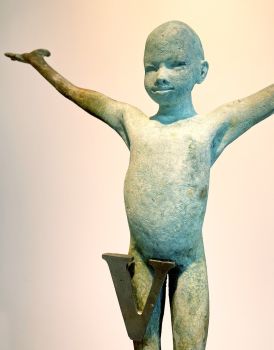
Henk Visch
‘I see, I understand, I know, I remember, I do’1991
Precio a consultarGalerie Mia Joosten Amsterdam
1 - 4 / 24- 1 - 4 / 24
- 1 - 4 / 12