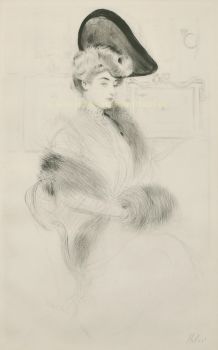
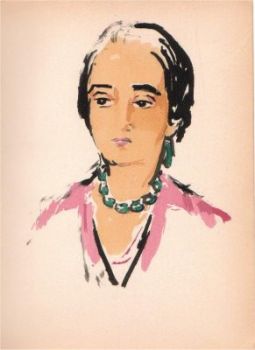
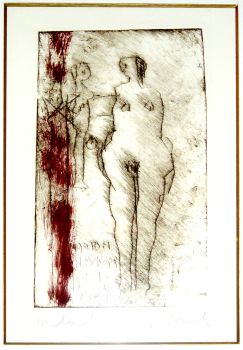
Portrait of a young lady 1900
Paul-Cesar Helleu
GrabadoImpresión
40 ⨯ 28 cm
€ 1.250
Inter-Antiquariaat Mefferdt & De Jonge
- Sobre la obra de artePortrait d’une jeune femme regardant vers sa gauche. Drypoint etching, made by Paul César Helleu around 1900. Pencil-signed at lower right. Size: 40 × 28 cm. At the mention of the name Helleu, one immediately thinks of the Belle Époque: an era of elegance and cosmopolitan refinement that extended from the late nineteenth century until the outbreak of the First World War. Paul César Helleu (1859–1927) began his career as an apprentice ceramicist while also taking drawing lessons. In 1876, following the death of his father, he moved—against his mother’s wishes—to Paris to study at the École des Beaux-Arts. There he quickly became part of artistic circles associated with Impressionism and came into contact with artists such as Edgar Degas, James Jacques Tissot, and Giovanni Boldini, as well as influential figures from the literary and social world, including Robert de Montesquiou. In 1884 Helleu received a commission to portray the young aristocratic woman Alice Guérin. Two years later she became his wife. Through her, he was introduced into the highest social circles of Paris, where he rose to become one of the most sought-after portrait artists of the beau monde. Helleu’s style, characterized by exceptional feminine grace and refinement, was admired not only in Paris but also found great acclaim among high society in London and New York. His sitters included Consuelo Vanderbilt, Marchesa Casati, Belle da Costa Greene, Louise Chéruit, and Helena Rubinstein. Helleu was also a virtuoso of drypoint etching, a technique in which a diamond-tipped needle is used to draw directly onto a copper plate. In this medium, he employed the same free, dynamic, and refined line as in his pastels. Price: Euro 1.250,-
- Sobre el artista
Paul-César Helleu fue un pintor francés conocido por sus elegantes retratos de mujeres de la Belle Époque. A los dieciséis años, ingresó en la École des Beaux-Arts, donde desarrolló su formación clásica a la vez que desarrollaba una aguda visión de la modernidad y el estilo.
Ese mismo año, asistió a la Segunda Exposición Impresionista, donde conoció a Claude Monet y John Singer Sargent. El impacto de su obra fue inmediato: las pinceladas sueltas, la luz y la modernidad natural del lienzo armonizaban a la perfección con la sensibilidad de Helleu para la atmósfera y el carisma. Forjó una estrecha relación con Sargent, que adquirió gran importancia tanto artística como personal.
Se convirtió en uno de los artistas más respetados de la época eduardiana. Sus retratos combinan refinamiento con una aparente naturalidad: las mujeres se le presentan como iconos de su época: elegantes, seguras de sí mismas, rodeadas de un mundo de moda, lujo y una psicología sutil. Su reputación le valió la membresía honoraria de varias sociedades artísticas y su obra fue ampliamente coleccionada. Hoy en día, sus pinturas se encuentran en colecciones de museos de todo el mundo.
¿Está interesado en comprar esta obra de arte?
Artwork details
Related artworks
- 1 - 1 / 1
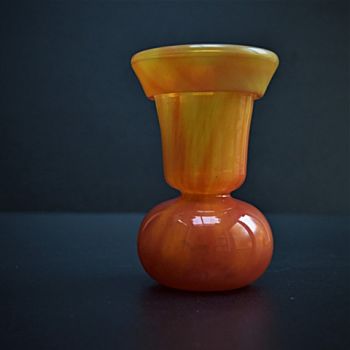
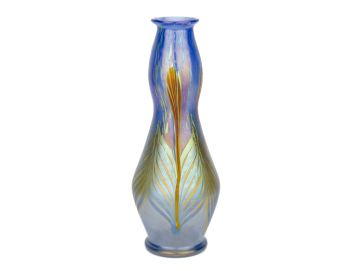
Johann Loetz (Lötz) Witwe Klostermühle
Johann Loetz Witwe - Phänomen Genre 7773 – Orange1900 - 1910
Precio a consultarAntiques Emporium
1 - 4 / 24Lambertus Zijl
Portrait of Juliana, queen of the Netherlands (1948-1990)1900 - 1950
Precio a consultarKunsthandel Pygmalion
1 - 4 / 24- 1 - 4 / 24
- 1 - 4 / 12